

GTM Strategy 2026: How CMOs Can Build a Future-Ready Go-to-Market Engine

In 2026, the go-to-market landscape looks nothing like it did even three years ago. AI, real-time data, and buyer intent signals are rewriting how organisations reach and convert customers.
For CMOs, the challenge is no longer about launching products; it’s about orchestrating a living system that continuously learns, adapts, and scales.
This article unpacks what a modern GTM strategy must include to stay ahead of the curve. You’ll gain a clear framework to align teams, build signal-driven growth, and create a go-to-market engine that keeps pace with change.
Why Does GTM Strategy Matter More Than Ever?
The go-to-market (GTM) strategy defines how a business delivers its value proposition to target customers and achieves competitive advantage. Historically, GTM plans were annual roadmaps, but in 2026 and beyond, they must be living systems.
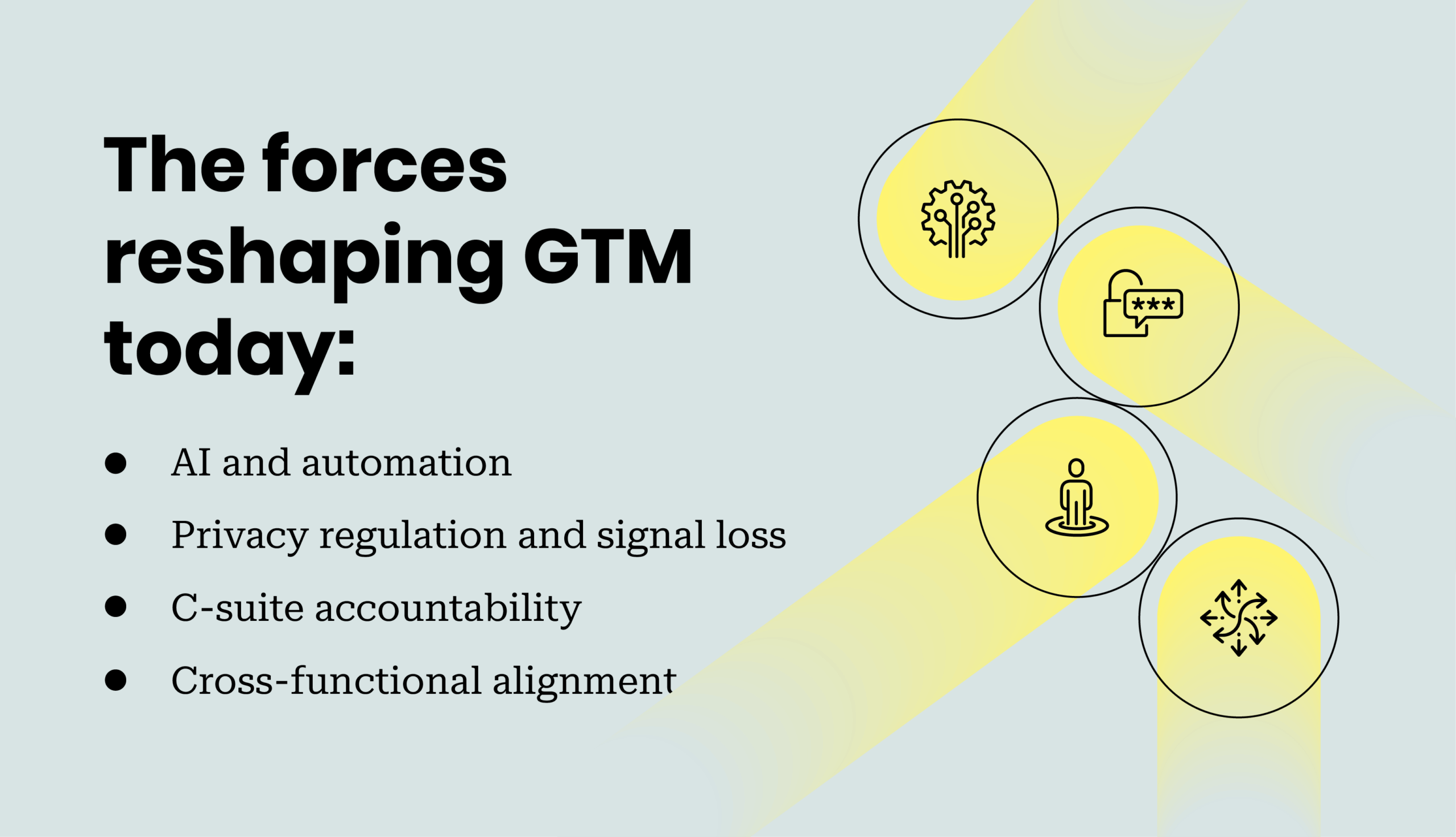
The forces reshaping GTM today:
- AI and automation enable predictive segmentation and hyper-personalisation at scale (SuperAGI, 2025).
- Privacy regulation and signal loss require first-party data ownership and consented engagement.
- C-suite accountability ties marketing directly to revenue velocity and ROI (MarTech.org, 2025).
- Cross-functional alignment turns GTM into an organisational sport (Salesforce Ventures, 2025).
Static plans can’t keep up. The modern CMO needs a dynamic, signal-driven framework that evolves in real time.
How Can CMOs Use Buyer Signals to Redefine GTM Targeting?
Shift: Move from firmographics to behavioural and intent signals. Companies that use multi-source intent data see up to 25% higher pipeline conversion (Tendril, 2025). CMOs can now leverage AI to identify micro-segments with spiking engagement probability, turning ‘total addressable market’ into ‘total actionable market.’
So what: Targeting becomes dynamic. Budgets shift toward signals of active interest, not just fit. The result: leaner spend, higher impact.
Why Outcomes, Not Features, Should Anchor Your 2026 GTM Messaging
Shift: From feature-based storytelling to outcome-driven value. Buyers no longer care what your product does; they care what it changes. Every message should translate capability into business impact.
According to Gartner’s 2025 Product Marketing Trends, the most effective brands link their value proposition directly to outcome metrics such as efficiency gains and revenue acceleration. Forbes adds that relevance depends on being exactly where your customer spends time with a message that matters.
So what: Lead with proof, not promise. Use case studies and impact statistics in top-funnel assets to build credibility fast.
How Can CMOs Design Modular GTM Frameworks That Evolve Continuously?
Shift: From big-bang launches to modular architecture. AI-enhanced teams are building GTM models that can spin up new verticals or geographies on demand (MarTech.org, 2025). Instead of reinventing the wheel for each launch, create reusable components: messaging templates, data pipelines, and enablement assets.
So what: You gain agility and reduce cycle time. Your GTM engine becomes a scalable system, not a one-off event.
How Can Cross-Functional Orchestration Strengthen Your GTM Engine?
Shift: Marketing alone can’t own GTM. Effective 2026 GTM strategies involve sales enablement, customer success, operations, and finance from day one. Salesforce Ventures notes that the most profitable companies build shared dashboards and OKRs across functions.
So what: Create a GTM Ops rhythm; joint sprints, shared data, and clear hand-offs. Alignment is no longer a meeting; it’s an operating model.
How Can CMOs Build a GTM Engine That Learns in Real Time?
Shift: Measurement and learning as a continuous loop. Modern GTM leaders treat experimentation as core infrastructure. They set guardrails, run tests, and pivot weekly. Pepper Insight reports that companies with embedded experiment pipelines achieve predictable growth even in volatile markets.
So what: Adopt a ‘measure → experiment → optimise’ mindset. Kill what fails, scale what works. Let data and not ego drive iteration.
Putting It into Practice: A Five-Step GTM Blueprint for CMOs
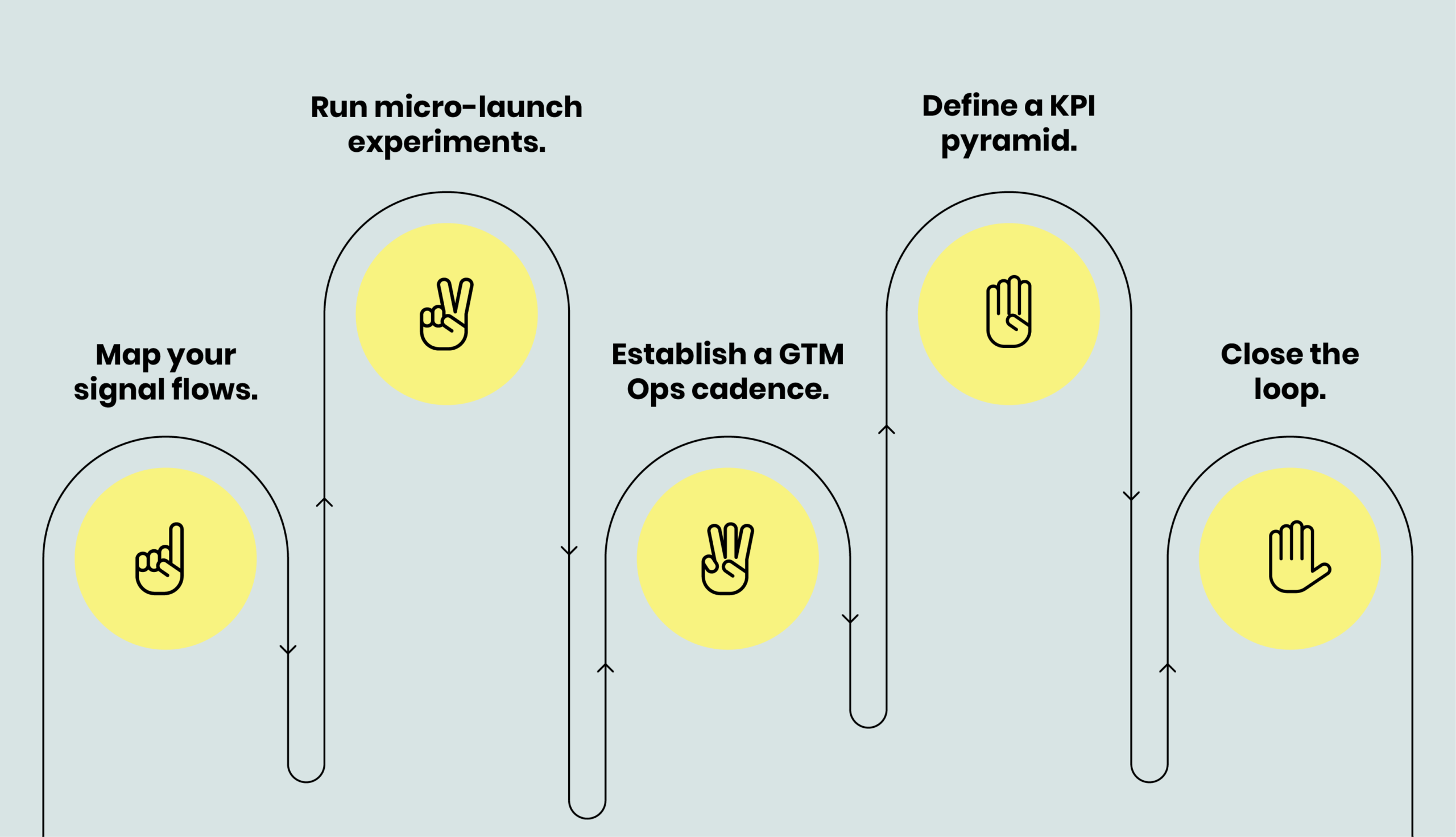
- Map your signal flows. Track behavioural, usage, and third-party intent data.
- Run micro-launch experiments. Test messages by region or segment before scale.
- Establish a GTM Ops cadence. Hold weekly cross-team sprints to align execution.
- Define a KPI pyramid. From intent → engagement → qualified conversation → revenue.
- Close the loop. Use feedback and win/loss insights to refine segmentation and messaging.
Case Example: Signal-Driven Growth in Action
A mid-market SaaS firm re-engineered its GTM around intent signals rather than broad verticals. By tracking content engagement and trial activity, it triggered personalised micro-campaigns for high-intent accounts.
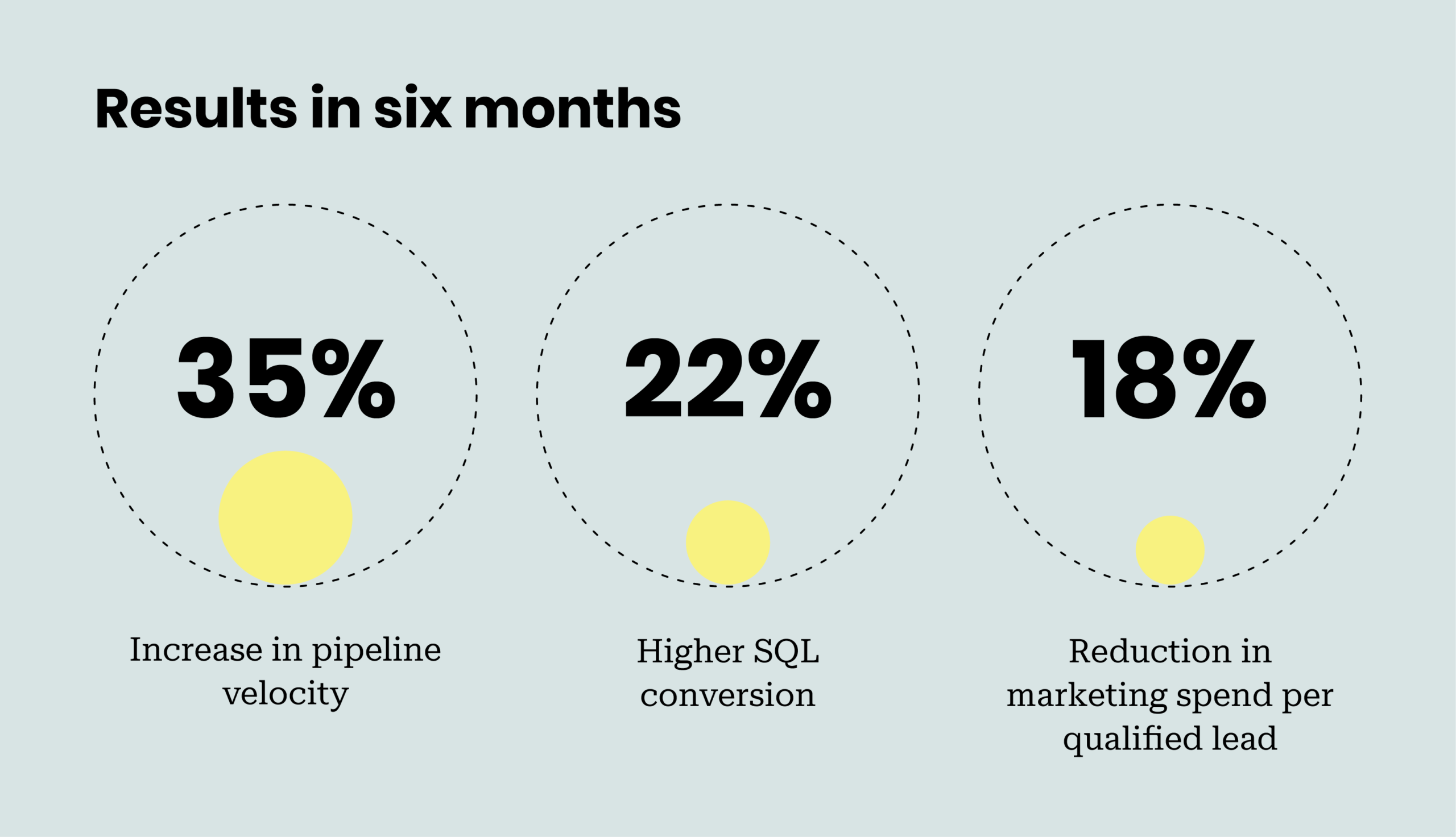
Results in six months:
- 35% increase in pipeline velocity
- 22% higher SQL conversion
- 18% reduction in marketing spend per qualified lead
A living GTM engine proved faster, leaner, and more resilient than static plans.
FAQ: GTM Strategy For 2026 And Beyond
1. What are the key components of a GTM strategy?
A GTM strategy defines how a company delivers its value to target customers and achieves advantage. It covers segmentation, positioning, messaging, channel mix, enablement, and measurement. In 2026, it’s becoming signal-driven and continuous.
2. How is GTM strategy changing for CMOs in 2026?
AI, data privacy laws, and buyer expectations are forcing CMOs to build modular GTM frameworks that learn and adapt in real time rather than annual campaign cycles.
3. What’s the difference between GTM strategy and marketing strategy?
Marketing strategy focuses on brand and demand. GTM strategy aligns marketing, sales, product, and customer success to deliver revenue and growth outcomes.
4. How can AI enhance GTM performance?
AI enables predictive segmentation, personalised messaging, and workflow automation, accelerating pipeline velocity while improving customer experience.
What’s Next for GTM in 2026 and Beyond?
In the coming years, GTM strategy will evolve into a self-optimising ecosystem. AI agents will predict buyer readiness, allocate budget automatically, and adjust messaging on the fly. The competitive edge will come from trust, interpretive insight, and narrative design, not just data.
Winning CMOs will master:
- Autonomous GTM stacks that shift resources based on signal velocity.
- Narrative architecture that evolves with context.
- Ethical AI governance to maintain privacy and brand trust.
The future of GTM belongs to adaptive organisations that learn faster than their markets do.
Conclusion: Start Planning And Testing Today
A 2026-ready GTM strategy isn’t a plan; it’s a living system. For CMOs, the mandate is clear: build a signal-driven, modular, cross-functional engine that evolves continuously. Those who treat GTM as a process of learning and alignment, not just launching, will own the future.
If you’re reviewing your next GTM playbook, start by mapping your signals and running a micro-experiment today. Speed of learning is now the most valuable competitive advantage.

About the author:
Partner at Tomorrow People
Pete is a strategic marketing leader specialising in positioning, go-to-market strategy, growth and AI-enabled marketing performance. He has worked with organisations including Schneider Electric, TechData, Atos, Microsoft, Reachdesk, ABB, TelmarHelixa, Trustpilot, Company365, GlobalData and more, helping brands sharpen their market position, strengthen go-to-market execution and accelerate growth.
His work focuses on turning complex propositions into clear market narratives, aligning commercial teams around stronger positioning and improving marketing performance through the smart application of AI. From category development and messaging to launch strategy and growth planning, Pete brings a practical, commercially grounded perspective shaped by hands-on experience across B2B and enterprise environments.
Pete has also spoken at Content Marketing World, where he has contributed to industry conversations on positioning, growth and the changing role of AI in modern marketing. He writes about the strategies, decisions and operating models that help ambitious brands move faster, communicate more clearly and perform more effectively.
Read the latest positioning trends and insights.
Tap into our brand and product positioning, storytelling, and creative expertise to inspire your next strategic move.