Why Nothing Launches on Time (and Why It Matters Now)

There’s a particular kind of frustration that modern marketing and product teams carry quietly. It isn’t the pressure of targets, or the complexity of channels. It’s the repeated experience of watching strong ideas stall inside the organisation long enough for the market moment to pass.
If you’ve ever watched a launch move from “nearly there” to “just one more review” to “we’ll regroup next week”, you already know the feeling. The deck becomes final-final-v6. The brief gets reopened after an exec comment. Sales asks for the new story, and you’re still waiting on approval. Everyone is working, but nothing is moving.
Here’s the part that matters: this isn’t just you, or your company, or your team.
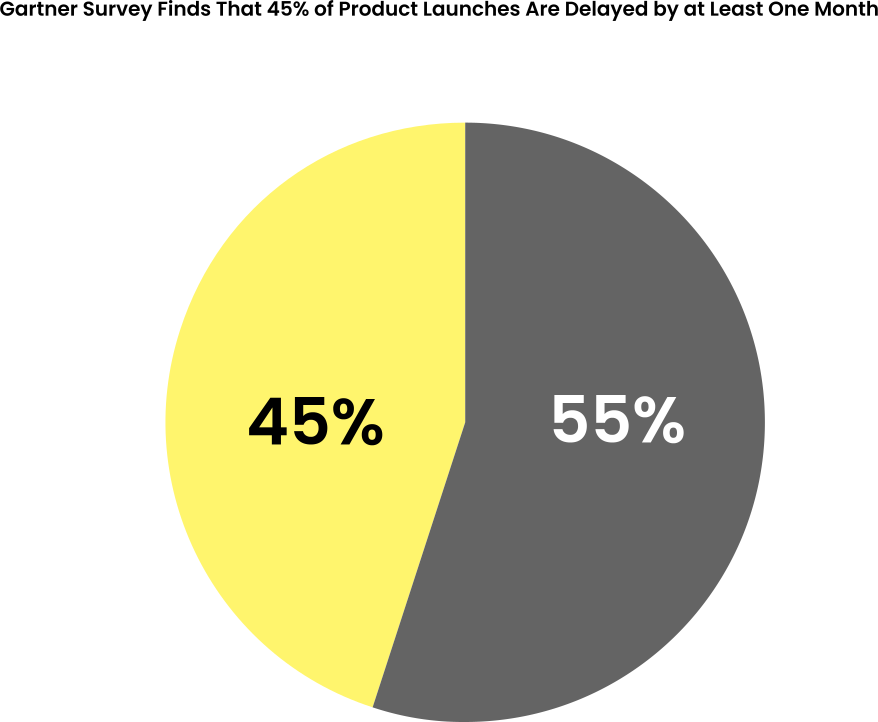
Gartner found that only 55% of product launches take place on schedule, and of the 45% that are delayed by at least a month, 20% on average fail to meet internal targets. Delay is common but it isn’t neutral.
Most teams don’t set out to be slow. They’re designed to protect credibility. Brand governance exists to ensure consistency. Stakeholder alignment exists to reduce risk. Review processes exist to prevent reputational damage. In B2B, these instincts are sensible and often necessary.
Governance isn’t the villain. Drift is.
Over time, many organisations begin to confuse carefulness with slowness, and slowness with responsibility. Launch dates slip. Then they slip again. Eventually, slipping becomes normal.
When that happens, the damage isn’t limited to a project plan. Marketing stops planning tightly around launches because dates no longer feel real. Sales continue telling yesterday’s story because tomorrow’s has not been approved. Product disengages from GTM coordination because enablement rarely lands on time. RevOps hedges on measurement because launches seldom occur as designed.
Work continues, but conviction fades. The organisation remains active, but it stops being decisive. Momentum dies first.
Delay is universal, but it isn’t “just operational”
From a distance, delayed launches look like inefficiency. In practice, they create strategic leakage that compounds quietly over time.
B2B markets move in windows. Budget cycles shift. Categories evolve. Competitors test new narratives. Buyers reframe problems based on what they learn elsewhere. When a launch slips by weeks or months, marketing does not simply arrive later. It arrives into a different conversation.
There’s also a learning cost that is far less visible, but far more damaging. Every launch is a learning engine. It reveals what buyers repeat back, what they challenge, what builds belief, and what creates friction. When launches are delayed, learning is delayed. Teams remain trapped in internal debates for longer, often debating issues that real market signal would resolve quickly.
And while teams are stuck in debate, time is leaking everywhere. Deloitte’s 2025 Global Human Capital Trends work found that respondents reported 41% of their time each day is spent on work that doesn’t contribute to the value their organisation creates.
Launch delays thrive in that kind of hidden drain: status chasing, rework loops, version chaos, “alignment” that never resolves anything.
The real reason nothing launches on time
Most delayed launches don’t fail because of one big mistake. They fail because of a familiar stack of small frictions, each defensible on its own, collectively devastating.
Overlapping ownership without authority. Unclear goals that prevent trade-offs. Messy feedback loops that create late-stage rewrites. Excessive approvals used as risk management. Scope creep wrapped in “completeness”. The quiet fear of making a sharp claim in public, because sharp claims create exposure.
None of this reflects weak marketing talent. What it reflects is coordination tax: the invisible cost of synthesising information, aligning stakeholders, managing versions, translating insight into multiple formats, and keeping everyone comfortable. Marketing doesn’t move slowly because it lacks ideas. It moves slowly because too much energy is spent moving information rather than shaping meaning.
If you want a business-shaped way to think about it, BCG makes a blunt point in a different context: when work is delayed, value doesn’t simply arrive later. It shrinks. They illustrate how a six-month delay can reduce a projected 10x return to 4x or 5x in realised value.
That is what delay does. It quietly compresses the upside while everybody is still “being careful”.
Why it matters now
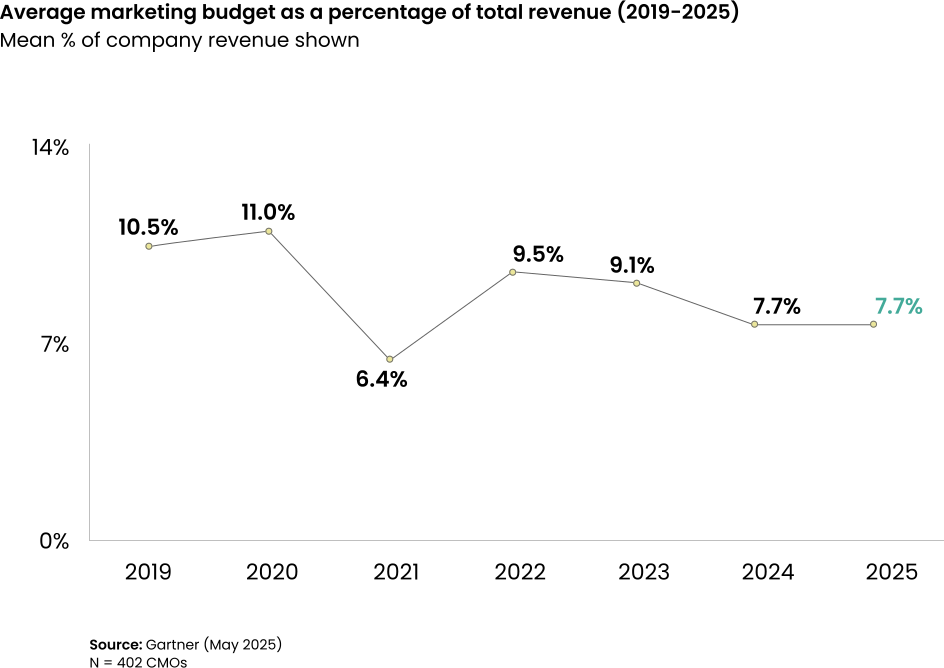
This is happening at the same time marketing leaders are being asked to do more with less. In Gartner’s 2025 CMO Spend Survey, 59% of CMOs said they had insufficient budget to execute their strategy in 2025.
When budgets don’t expand, wasted time becomes the most expensive thing in the room.
Time also correlates with performance more directly than most teams admit. McKinsey found that time-to-market had the strongest correlation with higher profit margins among the metrics they assessed. Its correlation with higher revenue growth was three times stronger than customer satisfaction (and seven times stronger than employee satisfaction).
That doesn’t mean speed is strategy. It means speed is the gate. If you can’t move, you can’t learn, and if you can’t learn, you can’t stay relevant.
FAQs
Why do product and marketing launches get delayed so often?
Because most delays aren’t caused by a bad plan. They come from the work around the work: overlapping ownership, too many goals, late-stage stakeholder input, and approval loops that create rework. The team stays busy, but the launch stops moving, and slipping becomes normal.
What are the biggest reasons launches don’t ship on time?
The usual culprits are predictable. Decisions take too long because accountability is shared but authority is unclear. Scope expands because the launch is asked to do too much. Reviews multiply because risk is managed through approvals instead of clarity. Senior feedback arrives late and resets the brief. Each issue is defensible on its own. Together, they create chronic delay.
What does “coordination tax” mean in marketing and launch work?
Coordination tax is the invisible cost of aligning people and information: meetings, status chasing, handoffs, version control, synthesising feedback, translating insight into multiple formats, and keeping everyone comfortable. It’s the reason launches can feel “active” without being decisive. Too much energy goes into moving information, not shaping meaning.
How can AI help teams launch faster without lowering quality?
AI helps most when it removes friction rather than replacing judgment. It can compress the in-between work that slows launches down: summarising inputs, turning insight into draft assets, maintaining consistency across versions, and speeding up synthesis. Humans still own meaning, decisions, tone, and truth. AI helps restore motion so the team can learn earlier and stay credible.
Key takeaways
- Delay is universal, and it has measurable consequences. It’s common for launches to slip, and when they do, targets suffer.
- The biggest cost is not the late date. It’s the internal time drain, the rework, and the lost learning that keeps teams debating instead of adapting.
- There’s urgency now because budgets are tight and time-to-market links directly to performance. In the Speed Economy, momentum is a growth lever.
Days to Launch, and the start of the Speed Economy movement
Days to Launch is a movement for modern marketing, product, and brand teams who are tired of ideas getting stuck in process.
We show how human expertise and AI acceleration can take campaigns from concept to market in days, not months, because in the new economy, the slow don’t just lose time, they lose relevance.
This starts with a simple reframe: Days to Launch is the time it takes to move from validated insight to credible market exposure. Not perfect execution. Not full coverage. Credible, focused delivery that allows the organisation to learn, adapt, and build trust in motion.
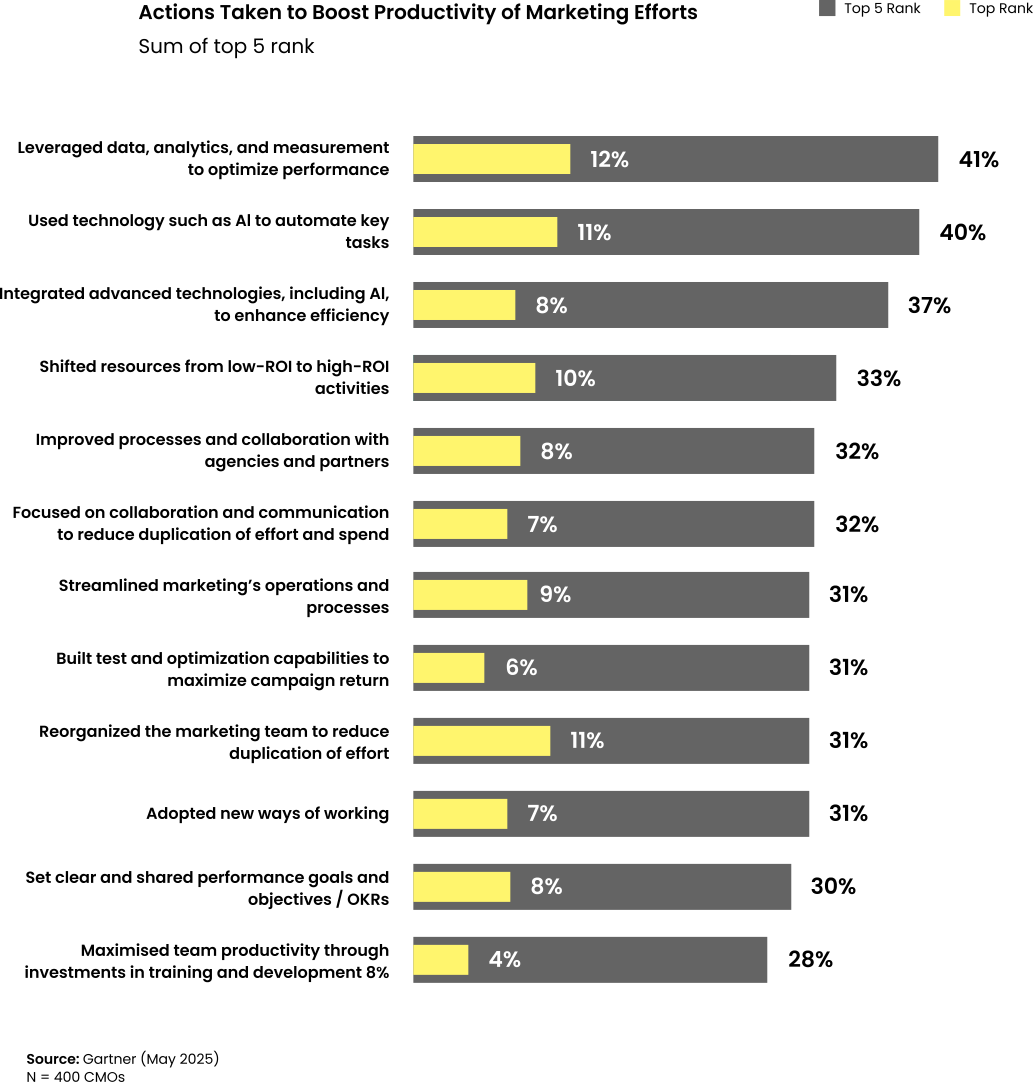
And yes, AI matters here, but not in the way most people assume. The real value of AI in marketing is not content generation. It is friction removal. It collapses the “in between” work where momentum gets lost: synthesising inputs, translating insight into briefs, managing versions, summarising feedback, maintaining consistency.
Gartner’s survey even reflects this shift: CMOs reported GenAI ROI showing up most in time efficiency (49%) and cost efficiency (40%).
Here’s the movement-level line we’re going to stand behind:
Credible beats complete.
If you want to join the Speed Economy, start with one decision this week. Pick one launch that is stuck. Define what “credible exposure” means in a single sentence, and choose a date that does not depend on everyone being comfortable. Then cut everything that isn’t required to learn.
That one act does three things immediately. It restores motion. It restores learning. It restores belief.
Read the latest positioning trends and insights.
Tap into our brand and product positioning, storytelling, and creative expertise to inspire your next strategic move.